Solana, Quietly Winning in the Crypto Market
Need articles like this for your video? They help promote it on YouTube and Google — order them in the Telegram bot @sat_sit_bot. The bot writes and publishes the articles itself (with your YouTube video embedded) on popular topical websites (no ads). Try it free: 50 articles on us.
· based on the channel Bitcoin Strategy
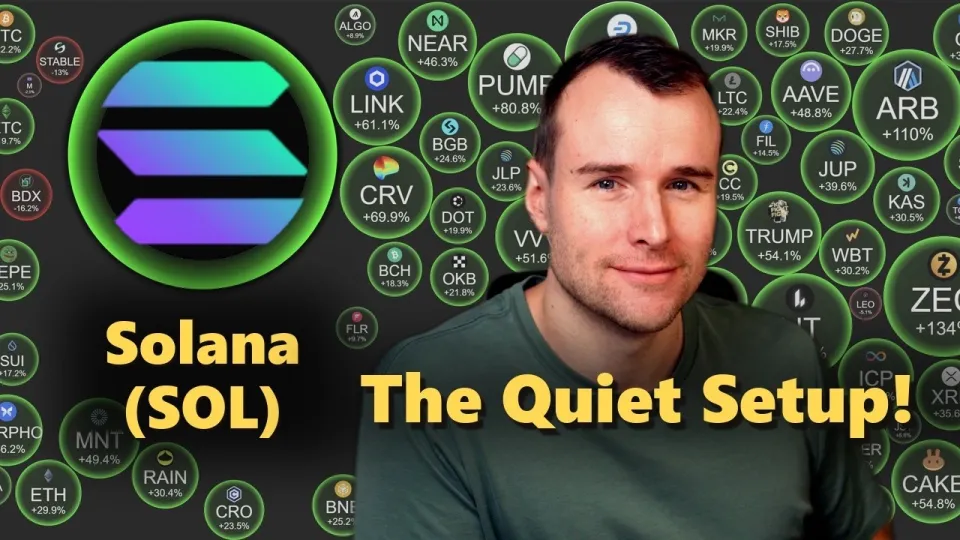
Solana is quietly winning in the competitive cryptocurrency market by delivering fast transaction speeds, low fees, and promising technological upgrades. Investors looking for a viable alternative to Ethereum find Solana attractive, especially with growing institutional interest reflected in Solana ETF inflows. For those interested, a bonus registration link to automatic copy trading is available here.
The Current State of Solana in 2026
Solana has made significant strides in 2026 by maintaining low transaction fees and high throughput, making it a preferred blockchain for decentralized applications and DeFi projects. Despite some setbacks, such as the postponed launch of the Firedancer network upgrade, Solana displayed record network activity the week before the delay, indicating robust underlying demand. Its fee structure remains notably lower than Ethereum’s, contributing to increased adoption.
Comparing Solana and Ethereum
Solana competes directly with Ethereum, especially in terms of speed and cost efficiency. Ethereum still leads in decentralization and ecosystem maturity, but Solana’s low fees and fast block times offer clear advantages. For example, while Ethereum transaction fees often spike during network congestion, Solana’s fees have stayed consistently minimal since summer 2025. This fee advantage is crucial for user retention and attracting developers.
Firedancer and Technological Innovations
Firedancer, a key upgrade expected to enhance Solana’s scalability and network stability, faced a launch delay but remains highly anticipated. This upgrade aims to optimize validator performance and network throughput, potentially solidifying Solana's position as the fastest blockchain. Coupled with ongoing protocol improvements, Firedancer could address some inflation concerns and improve network sustainability.
Solana Inflation and Its Impact
Inflation in Solana’s tokenomics remains a topic of debate among investors. While Solana is inflationary, its current inflation rate is lower than many competing altcoins, which helps reduce selling pressure on SOL tokens. The network's economic model balances inflation with staking rewards, encouraging holders to participate in securing the network while supporting price stability.
Institutional Interest and ETF Inflows
Solana has seen increasing institutional interest demonstrated by growing Solana ETF inflows throughout 2026. These inflows indicate confidence from large investors and add liquidity to the market. Compared to other altcoins, SOL ETFs are gaining traction as viable investment vehicles, making Solana a more prominent player in both retail and institutional portfolios.
Addressing Common Questions About Solana
Many investors wonder if Solana’s price will reflect its strong network metrics. Historical trends suggest that market prices eventually align with fundamental data, hinting at potential price surges to $600 or even $1000 per SOL in optimistic scenarios. Others question whether to hold SOL against Bitcoin and Ethereum, considering developments in real-world assets and DeFi. Solana’s lower fees and fast transactions make it a compelling option for certain use cases, but diversification remains key.
Useful Links
- Bonus automatic copy trading and registration: https://the-bitcoin-strategy.com/r/gOETmjod
- Trading chart software: https://the-bitcoin-strategy.com/tradingview
- Hardware wallet info: https://the-bitcoin-strategy.com/ledger
Conclusion
Solana is quietly winning by leveraging its low fees, fast transaction speeds, and upcoming Firedancer upgrade to challenge Ethereum's dominance. Institutional inflows into Solana ETFs further validate its growing relevance in 2026. While some inflation concerns persist, Solana’s balanced tokenomics and technological progress make it a strong contender in the altcoin space. This analysis is based on insights from the Bitcoin Strategy channel, a consistent source for Solana updates and market breakdowns. Consider exploring the automatic copy trading opportunity at https://the-bitcoin-strategy.com/r/gOETmjod to engage with strategies focused on Solana.
Key takeaways
- Solana offers low transaction fees compared to Ethereum.
- The Firedancer upgrade aims to improve Solana's scalability.
- Solana's inflation rate is currently lower than many competitors.
- Solana ETFs are experiencing notable inflows in 2026.
- SOL price predictions suggest potential for significant growth.
Source: 🚀 Solana Is Quietly Winning - SOL Crypto Analysis · Markdown version
Questions & answers
Is Solana inflationary and how does that affect its price?
Yes, Solana is inflationary, but its inflation rate is relatively low compared to other altcoins. This helps reduce selling pressure and balances staking rewards, which can support price stability over time.
How does Solana compare to Ethereum in terms of fees and speed?
Solana offers significantly lower transaction fees and faster block times than Ethereum, making it attractive for users and developers seeking cost efficiency and quick transactions, especially during periods of Ethereum network congestion.
What is the Firedancer upgrade and why is it important?
Firedancer is a planned network upgrade aimed at improving Solana's scalability, validator performance, and overall network stability. Although its launch was delayed, it is expected to enhance Solana’s competitive edge against other blockchains.
Are institutional investors showing interest in Solana?
Yes, institutional interest in Solana is growing, as evidenced by increasing Solana ETF inflows in 2026. This trend indicates confidence from large investors and adds liquidity and legitimacy to the SOL market.